Continuing the theme of effects videos, here is a nice one about 80s era video effects.
Showing posts with label 1980s. Show all posts
Showing posts with label 1980s. Show all posts
Monday, 31 August 2015

Tuesday, 13 January 2015


Friday, 27 September 2013
Bill Sebastian's Outer Space Visual Communicator
It's not often I come across such a unique hybrid instrument, the OCV by Bill Sebastian and eventually his company Visual Music Systems is a complex hybrid visual music machine with some very complex control interfaces. It incorporates both optical electromechanical light sources, electronic video effects and video generation and an incredibly complex interface system for intuitive instrumental control. The system has been adapted and added to over time extending it's original functionality while maintaining the beautiful imagery and excellent user control. So here is some information very kindly provided by Bill about his astounding and very unique visual instrument. (please excuse accuracy of the info as with such a complex system I may make mistakes or place the available images in relevant but not completely correct contexts)
http://visualmusicsystems.com

"The Original OVC built 1973-1978
Input devices (original system)
multi-touch keyboard using capacitance switches to support something similar to electronic finger painting,

as well as large numbers of switches, faders etc to control signal processing, 7 foot-pedals


Signal processing (original system)
signals processed by about 5000 separate TTL digital logic packages (DID YOU SAY 5000 BILL!) to build patterns, implement sequencers, and otherwise expand upon the multi-touch input. Total latency through processing system < 10 msecs, so that responses were as immediate as audio musical instruments, phase-controlled firing of projector lamps

above is a pic of 1 of 6 wire wrap boards, each with about 750 ICs.!


high contrast: performed in optically controlled environments (absolutely no light other than display) so that sections of performances were done in scotopic range (where luminance is too low for retina cones to function), so that we could explore the bottom threshold of visual perception. Concerts usually began at those levels and remained there long enough for the photoreceptor chemicals to adjust for maximum sensitivity, so that when we moved up to higher brightness levels, colors were generated that are not possible under normal lighting conditions

"Funniest moment in that process was once when we had a short between ground and VCC, which could be anywhere on board.Couldn't find it after half a day of searching. So we took the VCC & ground (no ICs were installed at this point) and plugged into 110VAC. Got a nice 'POP' and then had to do 1/2 hour of cleanup repair." (brilliant!)

Real-time video synthesis experiments 1980-1985
Input devices
used original OVC, but played with only 1 hand, as 2nd hand used control video equipment
video control system that allowed controlling cameras, optical effects, etc. with 1 hand
mouth controller that controlled 18x3 channel RGB mixing board using something like a 3D harmonica
Signal processing (video synthesis experiments) - added to the orignal OVC system:
The other low-level source is a line generator.It doesn't make a good dancer, but worked well with the kaleidoscope processor to provide a nice background texture to counterbalance the blobs."

To add a short extra interesting bit of information to this story the OVC was primarily if not exclusively used with the amazing Sun Ra and his Arkestra (can you think of a better partner for these visuals)


http://visualmusicsystems.com

"The Original OVC built 1973-1978
Input devices (original system)
multi-touch keyboard using capacitance switches to support something similar to electronic finger painting,

as well as large numbers of switches, faders etc to control signal processing, 7 foot-pedals


Signal processing (original system)
signals processed by about 5000 separate TTL digital logic packages (DID YOU SAY 5000 BILL!) to build patterns, implement sequencers, and otherwise expand upon the multi-touch input. Total latency through processing system < 10 msecs, so that responses were as immediate as audio musical instruments, phase-controlled firing of projector lamps

above is a pic of 1 of 6 wire wrap boards, each with about 750 ICs.!
Display (original system)
12 foot diameter hexagonal display curved as if looking at 10% of the inside of a sphere
rear projection using 3 primary filtered lamps per segment. 91 segments.
12 foot diameter hexagonal display curved as if looking at 10% of the inside of a sphere
rear projection using 3 primary filtered lamps per segment. 91 segments.


high contrast: performed in optically controlled environments (absolutely no light other than display) so that sections of performances were done in scotopic range (where luminance is too low for retina cones to function), so that we could explore the bottom threshold of visual perception. Concerts usually began at those levels and remained there long enough for the photoreceptor chemicals to adjust for maximum sensitivity, so that when we moved up to higher brightness levels, colors were generated that are not possible under normal lighting conditions

"Funniest moment in that process was once when we had a short between ground and VCC, which could be anywhere on board.Couldn't find it after half a day of searching. So we took the VCC & ground (no ICs were installed at this point) and plugged into 110VAC. Got a nice 'POP' and then had to do 1/2 hour of cleanup repair." (brilliant!)

Real-time video synthesis experiments 1980-1985
used original OVC, but played with only 1 hand, as 2nd hand used control video equipment
video control system that allowed controlling cameras, optical effects, etc. with 1 hand
mouth controller that controlled 18x3 channel RGB mixing board using something like a 3D harmonica
Signal processing (video synthesis experiments) - added to the orignal OVC system:
optical video effects, such as 6 foot long front-surface mirrors with 4 axis servo control over camera at one end and 2 axis control over monitor at other 18x3 channel RGB analog video mixing system, with 6 level depth controls per channel
I asked Bill about the complex lines generated in the mandala like structures and he very kindly replied
"There are actually 2 low-level image sources in the the videos, both of which go through the optical
kaleidoscope feedback processor. The blob-like shapes are coming from a video camera pointed at the original OVC. If you look closely at the them in some places you can actually notice that is a hand doing multitouch fingerpainting.The other low-level source is a line generator.It doesn't make a good dancer, but worked well with the kaleidoscope processor to provide a nice background texture to counterbalance the blobs."

To add a short extra interesting bit of information to this story the OVC was primarily if not exclusively used with the amazing Sun Ra and his Arkestra (can you think of a better partner for these visuals)
and Bills work is mentioned in the excellent book How To Wreck A Nice Beach which I am yet to dig in to. Bill apparently is also a keyboardist/synthesist and built much of the OVC in a basement at MIT as well as a barn in Ore City, Texas. The OVC would later go on to be referenced in the pioneering early Hip Hop classic from Jonzun Crew "Pac Jam Look Out for The OVC"
The lineage of Sun Ra's direct influence on the cosmic aspect of early hip hop can clearly be seen with the OVC being a link in that chain (detailed in a few places linked below in a far more knowledgeable way than I could ever do). Bills 3D system - started construction as of Jan, 2011 and is still under progress see coverage on web site!
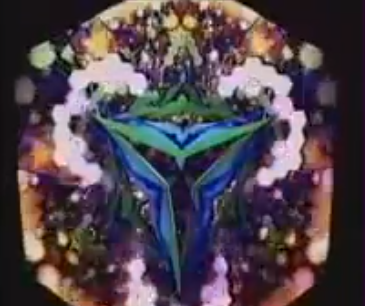

Ill Leave you with Sun Ra and the OVC
http://visualmusicsystems.com/OVC.html
http://www.libraryofvinyl.org/tag/sun-ra/
http://howtowreckanicebeach.com/?p=197
http://www.thafoundation.com/jonzun.htm
http://visualmusicsystems.com/OVC.html
http://www.libraryofvinyl.org/tag/sun-ra/
http://howtowreckanicebeach.com/?p=197
http://www.thafoundation.com/jonzun.htm
Tuesday, 5 February 2013
The Nocturnal Emissions' "Bleeding Images" + "The Foetal Grave of Progress"
John of of now defunct but fantastic blog Destructural Video has organised a screening showing two 1980's videos from the sound art project Nocturnal Emissions who as well as being involved in industrial/electronic music in the eighties were also early pioneers in scratch video.
Thursday, 14 February 2013, Wharf Chambers Ground Floor, 23 - 25 Wharf Street, LS2 7EQ Leeds
"Limerent Objects is proud to present a Sterile Records double bill screening of:
BLEEDING IMAGES (1982, 46 minutes, VHS)
THE FOETAL GRAVE OF PROGRESS (1984, 34 minutes, VHS)
Perhaps THE quintessential audiovisual statements of the post-industrial music scene. Provocative in content, prescient in style, these medium-length videos captured the subversive interests and activities of the pioneering sound art project The Nocturnal Emissions against a contextual backdrop of the UK between 1981 and 1984; a time rife with mass unemployment, civil unrest, media hysteria, political indifference, terrorism and war overseas. Burroughsian cut-ups reveal subliminal imagery hidden in exploitative mainstream broadcasting; shocking images of real-life violence against living beings are critically employed to expose our complacency in everyday cruelty; the thunderous soundscapes and ritual performances of The Nocturnal Emissions awaken the viewer's senses to our undermining culture controlled by fear and repression...
Rarely viewed since their initial home video releases and screenings at the Tate and ICA in the UK as a result of the imposing 1984 Video Recordings Act, both videos remain impressive today as early influential examples of the extended music video and key moments of the British independent video art movement. Countless artists and broadcasters have emulated or outright stolen the ambitions, aesthetics and techniques used in the videos of The Nocturnal Emissions, either directly or through watered-down copies - few however can match the tremendous power of the original works which are long overdue public and critical reassessment in these increasingly pertinent times.
Free entry with small donations welcomed. Doors open at 7:30. A short talk and introduction by the organiser will precede the first video at 8pm - second video will be shown after 9pm. Please be aware that these videos contains flashing images and some footage that may disturb those of a sensitive disposition.
Special thanks to Nigel Ayers/Earthly Delights and Piitu Lintunen for making this event possible.
*Wharf Chambers Co-operative Club is a members’ club, and you need to be a member, or a guest of a member, in order to attend. To join, please visit wharfchambers.org. Membership costs £1 and requires a minimum of 48 hours to take effect.*"
http://www.earthlydelights.co.uk/
http://nocturnalemissions.bandcamp.com/
http://www.nigelayers.com/
Friday, 18 January 2013
Michael Bohacz & Michael Wayne Davis
Here are some excellent videos form Michael Bohacz and Michael Wayne Davis created using the sandin image processor and other equipment for their Leonardo da Video company who provided chiago clubs with ambient video content during the early to mid-1980s. I one of the video descriptions Michael Bohacz states "By this time (very early 1980's) I was in the Advanced Video Synthesis class, taught by Professor Phil Morton". I would have liked to be in that class.
https://vimeo.com/michaelbohacz
http://www.youtube.com/user/cyberscopewizard/
http://www.cyberscopewizards.com/
https://vimeo.com/michaelbohacz
http://www.youtube.com/user/cyberscopewizard/
http://www.cyberscopewizards.com/
Thursday, 13 December 2012
The Electronic Palette
The Electronic Palette by Paul Gardener featured in Art News February 1985 is a typical article of the time that talks about electronic imaging. At the time real time computer imaging was a rare and costly proposition so the electronic artists studio (and many commercial imaging and effects suites) also contained analogue processors that offered real time image control. At the time this approach was a necessity and each section of the electronic studio used the least costly technology to achieve it's purpose because that was the path of least resistance. Digital and analogue, hardware and software sat together part of a combined work flow. I feel looking back on this approach from the point of view of the post digital electronic artists studio we can see how each technology can be valued for it's inherent qualities and physical manifestation. The physical realisation of the analogue video processor (or in fact the computer) and their interfaces both inform the artists approach and result in a unique finger print. It is futile to attempt simulation of both limitations, qualities and approach if you require the qualities of a specific technology. This is because simulation will result in a different experience for both the artist and observer as it is adding yet further layers of physical limitations and idiosyncrasies. In the post digital artists studio hopefully we can appreciate and utilise each technology and it's limitations with the goal of a more honest less flawed aproach to working with technologies. These are complicated issues :p
Here is a selection of scanned images form the article with credits to the respective artists.
If you are one of the artists and would like work removed or are from Art News,
please contact me and I will do so ASAP.
from the top,
Kenneth Snelson-Studies for Portrait of an Atom,
Lyn Blumenthal,Carol Ann Klonarides and Ed Panschke -Still from Arcade,
Robert Mallary-Variation #1,
J. Michael O' Rourke-Sahara II,
Michael Brakke-I Am Scared,
Kenneth Snelson, Image from Portrait of an Atom,
Michael Ardent-Effel Tower.


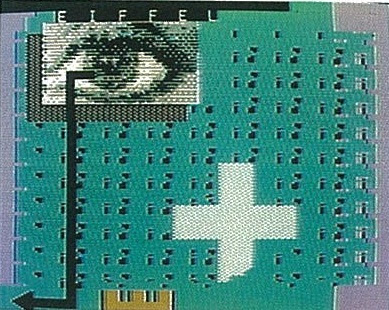
Here is a selection of scanned images form the article with credits to the respective artists.
If you are one of the artists and would like work removed or are from Art News,
please contact me and I will do so ASAP.
from the top,
Kenneth Snelson-Studies for Portrait of an Atom,
Lyn Blumenthal,Carol Ann Klonarides and Ed Panschke -Still from Arcade,
Robert Mallary-Variation #1,
J. Michael O' Rourke-Sahara II,
Michael Brakke-I Am Scared,
Kenneth Snelson, Image from Portrait of an Atom,
Michael Ardent-Effel Tower.


Friday, 11 June 2010
AKAI PS-V20E
Here's a sexy Akai video processor the PS-V20E with a nice colourizer and a joy stick! via this auction. It also came in black


Subscribe to:
Posts (Atom)