I will be doing a talk later today about optical sound and the history of photography of sound, Sally Golding will also be showing some of her work!
http://lapc.format.com/next-meeting
http://www.facebook.com/events/497347793749239/
Photo from Seeing Sound by Winston E.Kock
Showing posts with label film history. Show all posts
Tuesday, 5 May 2015
Thursday, 11 December 2014
F & S Themerson
Here is a great early visual music film by Franciszka and Stefan Themerson from 1944/45 The Eye and the Ear.
Monday, 3 November 2014
Secretcinemauk.blogspot.co.uk
And sometimes you find something you really shouldn't have missed
Sunday, 7 September 2014
Tomislav Mikulic
"Tomislav Mikulic is a Croatian computer Graphics pioneer who exhibited at the Tendencies 5 in Zagreb(former Yugoslavia) in 1973 at the age of 20. He had composed the First Yugoslav Computer Animation Film which had it’s premiere on 13th May 1976 in Zagreb.324"
http://tomislavmikulic.com
http://dada.compart-bremen.de/item/agent/585
http://tomislavmikulic.com
http://dada.compart-bremen.de/item/agent/585
Labels:
computer art,
film history,
video art,
video art history,
video history
Sunday, 15 June 2014
Étienne-Jules Marey & Georges Demeny
Marey & Demeny both photographers and inventors in France, working at the same time as Muybridge (and perhaps even more pioneering!) established a programme of research which was to lead to the creation of the ‘Station Physiologique' where they would use a variety of methods to visually record and study various kinds of movement. This was all going on at the dawn of film and many of their inventions were precursors or direct ancestors of the standard film camera and projector. They also recorded some images of sound , data and movement as light which is what I am interested in (see this post on early sound visualization/ photoacoustics)

http://en.wikipedia.org/wiki/%C3%89tienne-Jules_Marey http://en.wikipedia.org/wiki/Georges_Demen%C3%BF http://www.lumen.nu/rekveld/wp/?p=411 https://sites.google.com/site/drtrippy/chronophotography http://www.mpiwg-berlin.mpg.de/resrep00_01/Jahresbericht_2_3_section.html http://www.cinematheque.fr/marey/abecedaire/abecedaire-m/muscle.html http://victorian-cinema.net/demeny http://lightpaintingphotography.com/light-painting-history/

http://en.wikipedia.org/wiki/%C3%89tienne-Jules_Marey http://en.wikipedia.org/wiki/Georges_Demen%C3%BF http://www.lumen.nu/rekveld/wp/?p=411 https://sites.google.com/site/drtrippy/chronophotography http://www.mpiwg-berlin.mpg.de/resrep00_01/Jahresbericht_2_3_section.html http://www.cinematheque.fr/marey/abecedaire/abecedaire-m/muscle.html http://victorian-cinema.net/demeny http://lightpaintingphotography.com/light-painting-history/
Labels:
early cinema,
film,
film history,
photoacoustics,
sound on film
Friday, 6 June 2014
Film Preservation
Forgot to post these photos from some amazing training I did. If anyone wants to let me look after their video art, computer art or abstract animation I would be more than happy to help.
Saturday, 5 April 2014
Photoacoustics
Photoacoustics as a word is now used in association with various methods of studying electromagnetic activity via acoustic detection in medical and scientific contexts. Originally Alexander Graham Bell & Charles Sumner Tainter discovered the ability to modulate a light source using sound and inversely modulate a sound producing membrane using light when working on their Photophone optical telecommunications system. This line of thinking starting around 1880 with the Photophones invention and continuing right up to the 1920s, eventually made possible inventions like optical sound on film (with all these technologies being indebted to the even earlier discoveries of the photoelectric properties of materials such as selenium). Sound on film interests me a lot in both it's exploitation in the early 20th century by artists and purely for it's interesting technological development. I have gathered a lot of information about the creative use of sound on film but I also became interested to find evidence of still images that recorded sound (also see earlier post on the eidophone) so anyway the first two images are I believe of Bell's experiments from a really cool blog on photography Homemade Camera
Second are some images produced by Robert W. Wood using single wave fronts
produced by sparks, the latter image is a diagram based on the first, I believe.

Last up is the Phonodeik an instrument designed by Dayton Miller
that allows the photography over time of complex sound waves. It
reminds me very much of the earlier Phonautograph but with a
photographic output.
http://en.wikipedia.org/wiki/Photophone
http://en.wikipedia.org/wiki/Sound-on-film
http://en.wikipedia.org/wiki/Optical_sound
http://homemadecamera.blogspot.co.uk/2007/08/photoacoustics.html
http://en.wikipedia.org/wiki/Robert_W._Wood
http://en.wikipedia.org/wiki/Schlieren_photography
http://cultureandcommunication.org/deadmedia/index.php/Phonodeik
http://en.wikipedia.org/wiki/Phonodeik
http://www.phys.cwru.edu/ccpi/Phonodeik.html
http://courtneyjl.wordpress.com/
http://dssmhi1.fas.harvard.edu/
I have allot more stuff to include on this subject including cymatics and optical sound experiments which I left out to cut down the size of this post, but if you have any interesting links I always welcome tips in the comments
produced by sparks, the latter image is a diagram based on the first, I believe.
Last up is the Phonodeik an instrument designed by Dayton Miller
that allows the photography over time of complex sound waves. It
reminds me very much of the earlier Phonautograph but with a
photographic output.
http://en.wikipedia.org/wiki/Photophone
http://en.wikipedia.org/wiki/Sound-on-film
http://en.wikipedia.org/wiki/Optical_sound
http://homemadecamera.blogspot.co.uk/2007/08/photoacoustics.html
http://en.wikipedia.org/wiki/Robert_W._Wood
http://en.wikipedia.org/wiki/Schlieren_photography
http://cultureandcommunication.org/deadmedia/index.php/Phonodeik
http://en.wikipedia.org/wiki/Phonodeik
http://www.phys.cwru.edu/ccpi/Phonodeik.html
http://courtneyjl.wordpress.com/
http://dssmhi1.fas.harvard.edu/
I have allot more stuff to include on this subject including cymatics and optical sound experiments which I left out to cut down the size of this post, but if you have any interesting links I always welcome tips in the comments
Monday, 9 September 2013
New Oskar Fishinger Book
Just got this new Oskar Fishinger book, which has some beautiful images and interesting writing and contributions. Lots of visual music and abstract film techniques and ideas.
http://www.oskarfischinger.org/
http://www.eyefilm.nl
http://www.centerforvisualmusic.org/
here is one of the most interesting Images
http://www.oskarfischinger.org/
http://www.eyefilm.nl
http://www.centerforvisualmusic.org/
here is one of the most interesting Images
Labels:
animation,
expanded cinema,
experimental film,
film,
film history
Conservation of Electronic & Experimental Film & Video
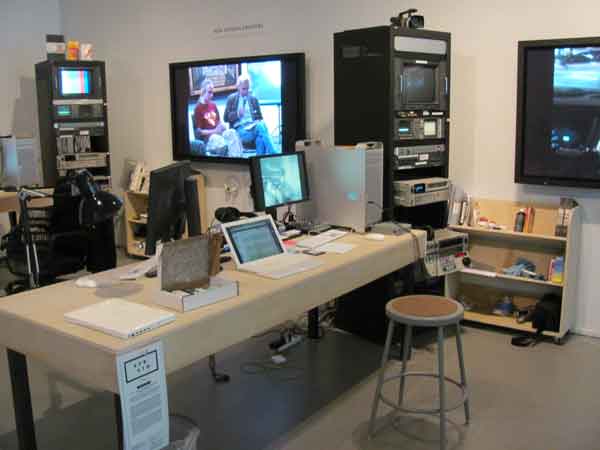
Conservation is a difficult thing when it comes to experimental work that by it's very nature can be created through delicate transient systems whose functions are often based on specific properties of the medium that the artist/technician choses to work in. In addition to the fragile nature of the synthesis or animation systems used to create the work pretty much every recording media from modern film stock through magnetic video to CRT tubes, are decaying. In addition to this decay items like CRT tubes are being supplanted by other technologies and whilst the potential to manufacture one off custom replacements is always there and yes you could make a small production run of colour 35mm film it will usually not be economically viable and over and above this the accuracy, experience of the industry and calibration of mass produced components and film stock means that it would be very unlikely you would end up with a comparable tool. These issues are also very present in computer and online work and are probably compounded a million times when discussing anything as medium specific as glitch work which usually relies on specific codec's, machines or a combination of the two. Another personal concern of mine is that institutions focus on preserving the 'spirit' of the work rather than slavishly preserving the exact technical specification or indeed remake the work in a completely unsympathetic way 'faking' or replacing real 'honest' processes. Another concern of mine with the democratisation of digital and electronic art and artists with non academic backgrounds creating amazing work (which has always been the case there are just way more of them now) I think it's important for conservators to really understand the technical side of the process to inform their decisions when choosing what to do about conserving work from an artist who may not have given any instructions of what the conceptual core of the work is (there may not be any) That said I think most conservators in this field are pretty amazing at doing just that and here are some recent examples I have been show of interesting projects some of which I am sure you will have already seen.
The XFR STN project at the New Museum, now finished is one of the coolest projects.
http://xfrstn.newmuseum.org Basically the project makes available a conservation technician and a whole load of equipment that allows anyone with content on obsolete media formats to come and get a conversion done as well as then creating an archive of the content collected which will be made available on archive.org, amazing really and some great work has come to light already even though the project has only just finished.
and another video from MOMA Conservation
It will be interesting to see what gets done about data corruption destructural, self destructive and work based around decay like Decasia (excerpt embedded below) or VHS generation loss based work or allot of circuit bent and glitch based work? how do we conserve work that destroys itself and should we?
The XFR STN project at the New Museum, now finished is one of the coolest projects.
http://xfrstn.newmuseum.org Basically the project makes available a conservation technician and a whole load of equipment that allows anyone with content on obsolete media formats to come and get a conversion done as well as then creating an archive of the content collected which will be made available on archive.org, amazing really and some great work has come to light already even though the project has only just finished.
Dov Jacobson's Human Vectors is one of the stand out pieces
also these links are interesting
http://www.newmuseum.org/calendar/view/always-already-obsolete-considering-the-convergence-of-analog-and-digital-media-in-xfr-stn
http://rhizome.org/editorial/2013/sep/9/video-born-digital-now-online/
Here is a collection of videos from Smithsonian American Art Museum about conserving and recreating Nam June Paik's work, a difficult task and one not devoid of irony as Paik's with his fluxus and performative background would probably be amused at the efforts undertaken to maintain his more transient work's in a frozen from, all the same amazing work.
and another video from MOMA Conservation
At the end of the month I am going to see a CVM screening at the Tate going to try and make the Bristol one too, which includes some of the centres most recently conserved new discoveries and restorations, without conservation work of this type I doubt I would get to see any of this sort of work. Can't wait to see the Jordan Belson and Fischinger work.
It will be interesting to see what gets done about data corruption destructural, self destructive and work based around decay like Decasia (excerpt embedded below) or VHS generation loss based work or allot of circuit bent and glitch based work? how do we conserve work that destroys itself and should we?
On the other hand many experimental artist's and film makers are incredibly secretive about their techniques (I'm looking at you Belson) and while I am personally all for sharing everything including my techniques, I can see secrecy as a strategy to try and prevent or slow down commodification of your output might work (and can also make you seem like some transcendental visual wizard). While I find film, video and hardware conservation amazing there is still something slightly unsettling about it, maybe too much documentation analysis and maintenance misses the point of allot of this work or maybe without the obsessives that go to far we wouldn't have the skills in the industry to do any conservation and I would never have seen some of my favourite work?
also organisations of note, might add more when I remember them
http://www.cinecon.org/
thanks to John, Philip, Camila and people on varous forums for links to work ect
Friday, 14 June 2013
The Prehistory Of Cinema & The Archology of The Moving Image
Lest stray into the world of film as I think it can tell us a lot about the development of video work and electronic media, after all one of the many progenitor technologies to video synthesis works are light shows, lumia and visual music works. However before we even get to cinema as an established art there were many artists and engineers experimenting with the new medium and contributing to it's development. Some of these works are almost like mechanical and chemical realisations of ideas that would later be explored in a similar way electronically by artists and engineers at the dawn of the video age.


Another Excellent website is http://www.visual-media.be/ whose links section is fantastic
here is a picture from the site of three children playing with a Chromatrope, as you can see it is very like a video synthesis work and even more similar to lighting effects still used today and that were present in many Lumia displays and their later descendants the light shows of the 1970s.
Antiquarian Holographica is another excellent source of information about a very large collection of artifacts documenting the history of 3D photography, film ,holography and work like laser light shows and even lumia!
And finally for now here is an amazing timeline of historical film colours that really bring home the structures in the mechanics of film that artists somtimes playwith http://zauberklang.ch/filmcolors/
Probably the best and almost definitive resource in the study of the the prehistory of cinema is Werner Nekes whose site and video series Media Magica, display and describe a dazzling series of optical toys, illusions and various moving image machines. Go buy the series!
Another Excellent website is http://www.visual-media.be/ whose links section is fantastic
here is a picture from the site of three children playing with a Chromatrope, as you can see it is very like a video synthesis work and even more similar to lighting effects still used today and that were present in many Lumia displays and their later descendants the light shows of the 1970s.
all images taken from their respective websites please ask and I will remove if necessary, more at some later date...
Labels:
cinema,
film,
film history,
moving image,
structural,
video art history
Friday, 12 April 2013
Film Series - Movement in Light: Pure Figures in Motion
National Gallery
12 April 2013, 19:00-20:00
Ondaatje Wing Theatre
Free
Programme
A Colour Box, by Len Lye (1935)
Loops, by Norman McLaren (1940)
Dots, by Norman McLaren (1940)
Vice Versa Et Cetera, by Simon Payne (2010)
Dresden Dynamo, by Lisa Rhodes (1971)
Mothlight, by Stan Brakhage (1963)
Blackout, by Aldo Tambellini (1965)
Early Abstractions, by Harry Smith (1939 – 1956)
12 April 2013, 19:00-20:00
Ondaatje Wing Theatre
Free
A Colour Box, by Len Lye (1935)
Loops, by Norman McLaren (1940)
Dots, by Norman McLaren (1940)
Vice Versa Et Cetera, by Simon Payne (2010)
Dresden Dynamo, by Lisa Rhodes (1971)
Mothlight, by Stan Brakhage (1963)
Blackout, by Aldo Tambellini (1965)
Early Abstractions, by Harry Smith (1939 – 1956)
Subscribe to:
Posts (Atom)