Conservation is a difficult thing when it comes to experimental work that by it's very nature can be created through delicate transient systems whose functions are often based on specific properties of the medium that the artist/technician choses to work in. In addition to the fragile nature of the synthesis or animation systems used to create the work pretty much every recording media from modern film stock through magnetic video to CRT tubes, are decaying. In addition to this decay items like CRT tubes are being supplanted by other technologies and whilst the potential to manufacture one off custom replacements is always there and yes you could make a small production run of colour 35mm film it will usually not be economically viable and over and above this the accuracy, experience of the industry and calibration of mass produced components and film stock means that it would be very unlikely you would end up with a comparable tool. These issues are also very present in computer and online work and are probably compounded a million times when discussing anything as medium specific as glitch work which usually relies on specific codec's, machines or a combination of the two. Another personal concern of mine is that institutions focus on preserving the 'spirit' of the work rather than slavishly preserving the exact technical specification or indeed remake the work in a completely unsympathetic way 'faking' or replacing real 'honest' processes. Another concern of mine with the democratisation of digital and electronic art and artists with non academic backgrounds creating amazing work (which has always been the case there are just way more of them now) I think it's important for conservators to really understand the technical side of the process to inform their decisions when choosing what to do about conserving work from an artist who may not have given any instructions of what the conceptual core of the work is (there may not be any) That said I think most conservators in this field are pretty amazing at doing just that and here are some recent examples I have been show of interesting projects some of which I am sure you will have already seen.
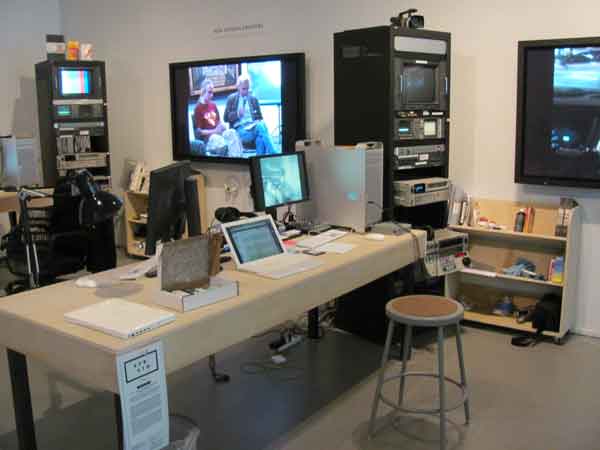
The XFR STN project at the New Museum, now finished is one of the coolest projects.
http://xfrstn.newmuseum.org Basically the project makes available a conservation technician and a whole load of equipment that allows anyone with content on obsolete media formats to come and get a conversion done as well as then creating an archive of the content collected which will be made available on
archive.org, amazing really and some great work has come to light already even though the project has only just finished.
Dov Jacobson's Human Vectors is one of the stand out pieces
also these links are interesting
Here is a collection of videos from Smithsonian American Art Museum about conserving and recreating Nam June Paik's work, a difficult task and one not devoid of irony as Paik's with his fluxus and performative background would probably be amused at the efforts undertaken to maintain his more transient work's in a frozen from, all the same amazing work.
and another video from MOMA Conservation
At the end of the month I am going to see a
CVM screening at the Tate going to try and make the Bristol one too, which includes some of the centres most recently conserved new discoveries and restorations, without conservation work of this type I doubt I would get to see any of this sort of work. Can't wait to see the Jordan Belson and Fischinger work.
It will be interesting to see what gets done about data corruption
destructural, self destructive and work based around decay like Decasia (excerpt embedded below) or VHS generation loss based work or allot of circuit bent and glitch based work? how do we conserve work that destroys itself and should we?
On the other hand many experimental artist's and film makers are incredibly secretive about their techniques (I'm looking at you
Belson) and while I am personally all for sharing everything including my techniques, I can see secrecy as a strategy to try and prevent or slow down commodification of your output might work (and can also make you seem like some transcendental visual wizard). While I find film, video and hardware conservation amazing there is still something slightly unsettling about it, maybe too much documentation analysis and maintenance misses the point of allot of this work or maybe without the obsessives that go to far we wouldn't have the skills in the industry to do any conservation and I would never have seen some of my favourite work?
also organisations of note, might add more when I remember them